| Khalaji highlights problems with US Persian-language broadcasts |
| Written by Babak Talebi | |
| Wednesday, 08 August 2007 | |
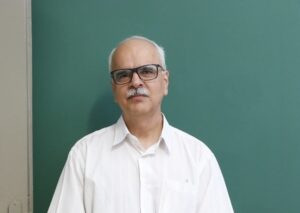
![]() Mehdi Khalaji Khalaji is the author of a recent publication by the Washington Institute for Middle Eastern Studies titled "Through the Veil: The Role of Broadcasting in U.S. Public Diplomacy toward Iranians." The report is a comprehensive look at various US-based broadcasting initiatives aimed at people of Iran. Khalaji opened his three part critique of the Persian-language media by arguing that "they don't follow the necessary ethics of journalism." He was highly critical of the lack of journalistic standards, saying VOA Persian and Radio Farda "don't differentiate between news and advocacy." Speaking about the makeup of the staff at VOA and Radio Farda, Khalaji said that, with rare exception, the employees have received no formal training as journalists. "No one is born a journalist, one needs to learn and study the ethics of journalism... the problem is that most of these people get behind a microphone or a camera and think that makes them a journalist." His second critique was aimed at the demographic make-up of the staff. Observing that a vast majority of the Persian-language staff at VOA left Iran more than 25 years ago and that the median age was over 50, he said "they can not relate to their intended audience." Khalaji also faulted the leadership of the Broadcasting Board of Governors (BBG), which oversees the VOA and Radeo Farda, for the lack of communication between the BBG and these media outlets. "I have talked to members of the BBG, the only connection between the BBG and VOA and Radio Farda is the director himself... there is no oversight or evaluation mechanism." Despite the highly critical nature of his findings, he said that US-based Persian-language programming serves an important purpose in informing the Iranian public. Khalaji pointed out the important role that such US-based media outlets have played in serving as surrogate news sources and bringing attention to the human rights abuses that take place in Iran. "If Iran had an open press, the foreign outlets would have no audience." In response to audience claims that the VOA and Radio Farda were only US propaganda tools, Khalaji pointed out that there are others who have pushed for the media outlets to be more strident and view them as not propagandist enough. "In the end," said Khalaji "if your goal is democracy promotion and to increase positive feelings towards the US [among Iranians], then this effort has not been successful." |
| < Prev | Next > |
|---|
