| Dialogue on Islamic Peacemaking: Report on a Mission to Iran |
| Written by John Einarsen | |
| Wednesday, 28 November 2007 | |
|
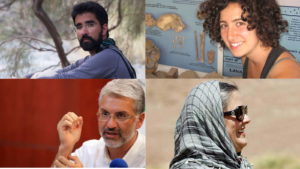
Washington DC - It is not every day that an American Muslim delegation is sent to Iran using U.S. government funds. But in October 2007, a team of specialists in conflict resolution crossed the ocean to discuss the ways in which Iranian society approaches peacemaking, conflict prevention, dialogue, and conflict resolution. The delegation met with locals from diverse backgrounds and varying political ideologies in an effort to enhance their understanding of the debates and challenges facing Iran today and US-Iran relations. Three of these delegates, Mohammed Abu-Nimer, Qamar-ul Huda and Ayse Kadayifci, delivered an analysis of the information and experiences at an event at the United States Institute for Peace. As a delegation of American Muslims, the team was in a unique position to access Iranian society. They met with lawyers, university students, religious leaders, social scientists and theologians throughout the country. The experts’ opening comments addressed the perceptions they held of Iran as first-time visitors and the ways in which those perceptions were proven wrong or adjusted. Ayse Kadayifci, the only female delegate on the team, noted that most university students she saw were women and that “her opinion as a woman was listened to and respected.” Qamar-ul Hada was impressed by the infrastructure and easy movement of peoples. On the other hand, the delegates also noticed evidence of inequality. While meeting with the Islamic Commission on Human Rights, an apolitical non-profit organization, the team was informed of the roughly two million cases of human rights violations which the organization was addressing. They also reported that the human rights situation in Iran continued to deteriorate as pro-rights activists are becoming less vocal due to government persecution of political opponents. This forces progressive minds to be evermore creative in addressing issues inside an authoritarian system. One example cited as a creative strategy is the Commission’s tendency to frame human rights issues using Islamic sources as a justification for their stance, providing more credibility than they would earn using traditional Western philosophy. A considerable number of University students hoped to pursue higher eductaion in the United States and Europe. However, they face significant challenges in obtaining a visa (similarly, it took the delegation thirteen months to obtain visas for their trip to Iran despite government sponsorship). From reformist scholars to conservative theologians and everything in between, the delegation engaged a wide range of members from Iran’s civil society and government. As mentioned in the closing comments, both reformists and conservatives expressed interest in improved relations with the United States. However, Abu-Nimer said that if military action becomes a reality, “members from every segment of society vowed to defend their homeland.” One suggestion from the delegation for improving US-Iran relations: make the most of American Muslims’ unique position to bridge the gap and act as ambassadors of the US to Iran in the name of fostering better communication and understanding. |
| < Prev | Next > |
|---|