Menu Content/Inhalt
An Iranian-American
Voice in Washington DC!
Home arrow News arrow Sanctions arrow Lantos Call for More Iran Sanctions at Hearing
facts

NIAC Newsletter


HTML Text

Donate to NIAC!

Enter Amount:

$

Upcoming Events

January 30, 2010

Civic Participation Workshop

Moore, Oklahoma

February 20, 2010

Civic Participation Workshop

Philadelphia, PA


Facebook

facebook

niacINsight

Beltway insights for the Iranian-American community

Login


Lost Password?
Lantos Call for More Iran Sanctions at Hearing
Written by Claudia Picou   
Thursday, 01 February 2007

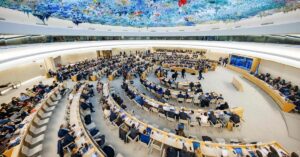
ImageWashington DC - Three distinguished academic scholars warned the House Foreign Relation Committee yesterday that a military confrontation with Iran would strengthen hardliners and set back the cause for democracy.

Dr. Abbas Milani, co-director of the Iran Democracy Project at the Hoover Institution, Stanford University, Ray Takeyh senior fellow for the Middle East studies at the Council on Foreign Relations, and Enders Wimbush, director of the Center for Future Security Strategies and senior fellow for the Hudson Institute, testified before the House Committee Foreign Relations on the subject “Understanding the Iran Crisis.”

Chairman Tom Lantos opened the hearing by accusing Iran of arrogantly continuing its nuclear activities. He stressed the importance to implement the recently extended Iran Sanctions Act against Asian and European companies that invest in Iran’s energy sector. Still, Lantos didn’t rule out dialogue either. “We must use every tool in our diplomatic arsenal,” he said.

“Comprehensive negotiations are not a grand bargain,” said Dr. Abbas Milani, adding that “frank discussion with Iran on all outstanding issues will, regardless of whether the regime accepts or rejects the offer, be a win-win situation for the US [and] for Iranian democrats.” The core of dialogue should be the issue of human rights of the Iranian people, emphasized Milani. He stressed that this approach would help consolidate fragile democratic voices outside and inside Iran.

Several Congressmen embraced Milani’s suggestion regarding initiating a dialogue with Iran. Congressmen Brad Sherman (D-CA), Mike Pence (R-IN), Dana Rohrabacher (R-CA), Edward R. Royce (R-CA) and Ted Poe (R-TX) advocated a more hawkish line.

Ranking Member Ileana Ros-Lehtinen (D-FL) expressed her strong disagreement regarding direct talks with Tehran. She announced that she is working on a bill with Congressman Lantos to further the economic sanctions against Iran, in order to divest and weaken that government.

Enders Wimbush called for more international broadcastings into Iran. “Surrogate radios,” Wimbush said, can be a powerful tool “in shaping and accelerating change.” The Iranian people, particularly the young educated masses, need to hear ideas and debates about Iran. This approach, concluded Wimbush, will directly address the Iranian people and help constrain the radicals among them.

He urged the Committee to restructure the programs of Radio Farda according to the Radio Free Iran Act of 1955, when Congress called for additional broadcasts to “open communication of accurate information and ideas about Iran to the people of Iran.”

Sharing is colleagues’ assessments of risks and challenges in the event of a war, Ray Takeyh said that “diplomatic engagement between the US and Iran maybe the only manner of tempering the theocracy’s more troublesome designs.” He expressed his skepticism regarding the willingness of Iranian regime to negotiate with preconditions, and pointed out that so far the US containment policies had not succeeded.


< Prev   Next >